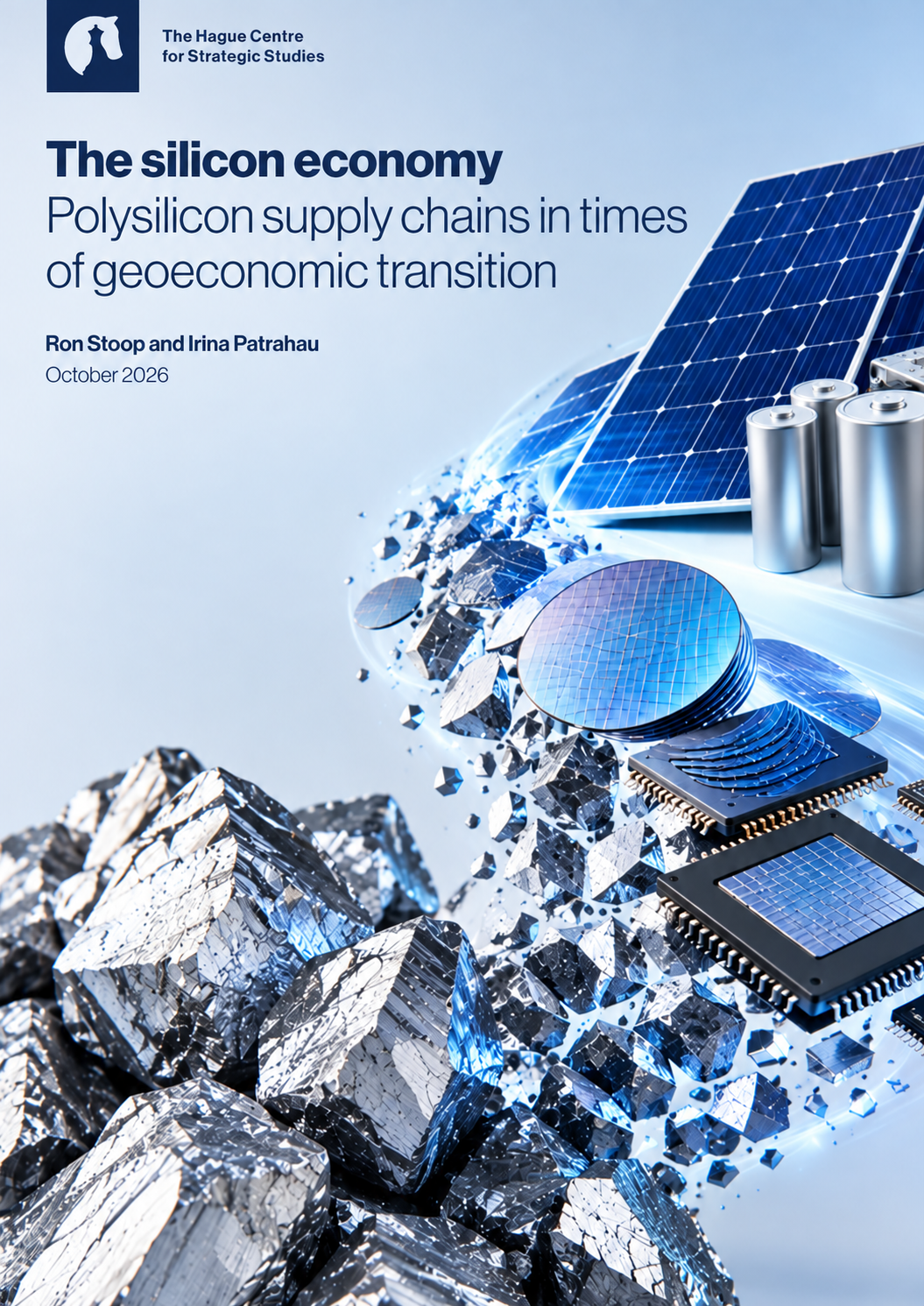
New research from The Hague Centre for Strategic Studies (HCSS) examines the strategic importance of polysilicon to Europe’s energy and digital ambitions.
The report, The silicon economy: Polysilicon supply chains in times of geoeconomic transition, looks at Europe’s position in global polysilicon supply chains and the case for stronger European production.
Polysilicon sits at the heart of several strategically important technologies. It is essential for solar photovoltaics and semiconductors, while products derived from polysilicon production are also increasingly relevant to advanced batteries. As global competition around these technologies intensifies, access to secure and resilient supply chains is becoming increasingly important.
The report highlights significant vulnerabilities in Europe’s current position. China accounts for around 95% of global solar-grade polysilicon production capacity, while Europe’s polysilicon production capacity is highly concentrated. At the same time, achieving Europe’s ambitions under the Net-Zero Industry Act and European Chips Act will require significant growth across solar and semiconductor manufacturing, increasing the need for a robust supply of polysilicon.
HCSS sets out three recommendations for European policymakers:
- Coordinate EU-wide polysilicon supply chains across semiconductors, solar photovoltaics and batteries.
- Mobilise EU financing to close gaps in polysilicon supply chains and support European producers in scaling production.
- Develop a tailored policy framework for polysilicon, which currently sits between the Critical Raw Materials Act and the Net-Zero Industry Act.
The report concludes that expanding European production of solar- and semiconductor-grade polysilicon could strengthen supply-chain resilience, reduce exposure to geopolitical and trade disruption, and support Europe’s wider industrial, climate and digital ambitions.
Read the full report: The silicon economy
The silicon economy was commissioned by RESiLICON and carried out by HCSS as independent research. The conclusions and recommendations are those of the authors.